

Pugal, Bikaner (Rajasthan): In a major stride for Rajasthan’s renewable energy landscape, the government-led Pugal Solar Park project — one of India’s largest solar power initiatives — is nearing completion, with Jyani Private Limited playing a significant role in infrastructure execution.
The ambitious Pugal Solar Park project, backed by the Rajasthan Solar Park Development Company Ltd (RSDCL) under the state government’s renewable energy mission, aims to establish a 2,450 MW solar power generation facility with an integrated 5,000 MWh battery energy storage system (BESS). This mega initiative spans over approximately 4,350 hectares of land in Pugal tehsil, with an estimated investment of around ₹17,000 crore, making it one of the most valuable renewable energy developments in the region’s history.
Government Project Becomes a Renewable Milestone
The Pugal Solar Park is designed to supply clean and reliable electricity across Rajasthan, combining massive solar power generation with cutting-edge storage technology to help meet peak-demand power needs even after sunset. The inclusion of a large-scale BESS is expected to strengthen grid stability and enhance energy security for both residential and industrial consumers.
Officials say the project is being executed under a plug-and-play model, where essential civil infrastructure, transmission connectivity, and grid evacuation systems are already being pre-developed to fast-track plant installations. This is expected to attract a wide range of renewable energy developers and investors.
Jyani Private Limited’s Crucial Role in Execution
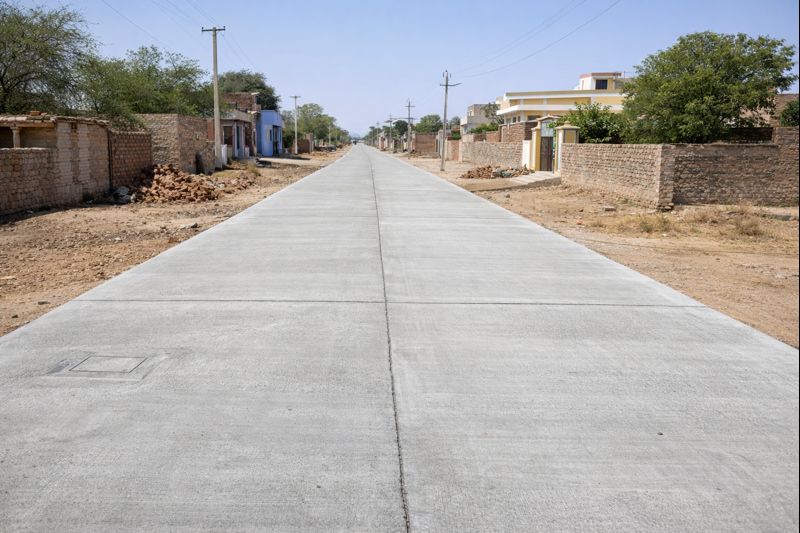
While the project remains under government oversight, Jyani Private Limited has been entrusted with critical execution responsibilities — particularly in site preparation, civil works, and foundational infrastructure development essential for large-scale solar plant deployment. The company’s technical expertise has contributed to preparing the landscape, ensuring road access, drainage systems, structural base works, and initial electrical infrastructure — forming the backbone for solar module installations.
Sources associated with the project highlight that Jyani Private Limited’s involvement has helped streamline preparations ahead of solar panel installation and grid integration, reinforcing the company’s reputation as a capable infrastructure partner. (Company details available at www.jyani.com)
Economic and Clean Energy Impact
The Pugal Solar Park project is expected to:
- Provide clean power generation capacity of up to 2,450 MW
- Support grid reliability with 5,000 MWh battery storage
- Generate employment opportunities during construction and operations
- Attract significant long-term investments
- Help Rajasthan meet its renewable energy and climate targets
Government officials have said that this project aligns with India’s broader plans to become a renewable energy leader, and Pugal is now positioned as a landmark center for solar power innovation in western Rajasthan.
Local Development and Long-Term Benefits
For local residents and businesses in Pugal and surrounding tehsils, the project promises economic uplift through job creation, enhanced infrastructure, and improved connectivity. The use of modern technology and storage integration also positions the park as a model for future renewable projects in the country.
Conclusion
The Pugal Solar Park project represents a major milestone in Rajasthan’s energy story, backed by one of the state’s largest investments in renewable infrastructure. With key contributions from Jyani Private Limited in critical execution groundwork, the project not only underscores the state’s commitment to sustainable energy but also highlights how local infrastructure partners are helping turn government visions into reality. As this mega plant progresses toward commissioning, it is expected to set new benchmarks for utility-scale solar developments in India.